
Measure not for data points, but for process control
At concentrators and slurry transport lines, uncertainty in density, flow or entrained gas can distort mass balance calculations, equipment loading and process control. Our role is to determine which variables should be measured at a specific point and how the data should be used in automation.
When additional measurements become necessary
Unstable operating conditions
Density or flow changes between laboratory samples, while deviations are detected too late.
Material balance mismatch
Calculated volumes and mass flows do not match between process areas, including cases with entrained gas.
Limited process visibility
Operators see isolated signals, but not the full picture of what is happening in the slurry pipeline.
Instrumentation upgrade
New measurement points are required and must be integrated into the existing SCADA, DCS or PLC environment.
Two measurements — two different process tasks
Alia ADM and CiDRA SONARtrac are not direct substitutes. The right choice depends on which variable is missing in the process model.
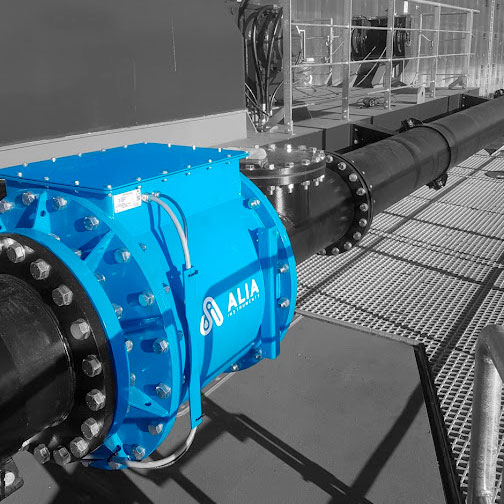
Alia ADM — continuous density measurement
A non-nuclear inline density meter for abrasive and non-homogeneous slurries. It can be used in grinding, classification, flotation, thickening and hydraulic transport circuits.
Key task: determine the actual bulk density of the medium.
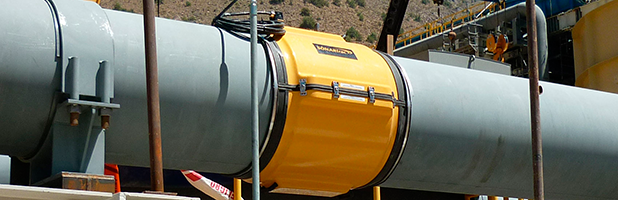
CiDRA SONARtrac — flow and entrained gas
An external acoustic system for volumetric flow measurement and entrained gas fraction (GVF) assessment in slurry pipelines. It helps account for the gas component that affects mass-flow calculations.
Key task: measure flow and account for gas content.
When measurements work together
ρ + Q + GVFDensity (ρ), volumetric flow (Q) and entrained gas fraction (GVF) provide a stronger basis for process calculations. Estimating solids mass still requires additional phase data, medium properties and a sound calculation model.
Where this is applicable
Grinding and classification
Density and flow control in mill circuits and cyclone feed lines.
Flotation and thickening
Tracking slurry condition and feed quality before key process stages.
Tailings and hydraulic transport
Monitoring transported slurry and keeping data consistent along long-distance pipelines.
Material balance
Combining online measurement data with lab assays and the process model.
Who benefits from these measurements
Process engineers
To understand deviations and evaluate process stability.
Instrumentation teams
To select the right measurement method and organise control points.
Automation teams
To use the signals in trends, alarms and control logic.
Chief engineers
To justify upgrades and assess production risks.
How GeoWatt structures the solution
We study the process
We clarify the medium, location, constraints and the measurement problem.
We define the variables
We determine whether density, flow, GVF or a combination is required.
We align the architecture
We review mounting conditions and data integration into the control system.
We prepare the proposal
We define the solution scope and prepare the request to the manufacturer.
Let’s discuss your measurement challenge
Describe the process section, medium, current instruments and the problem you need to solve. This allows the discussion to start from the engineering task rather than from a generic product list.
Final specifications, mounting options and limitations should always be confirmed against the current manufacturer documentation for the specific measurement point.