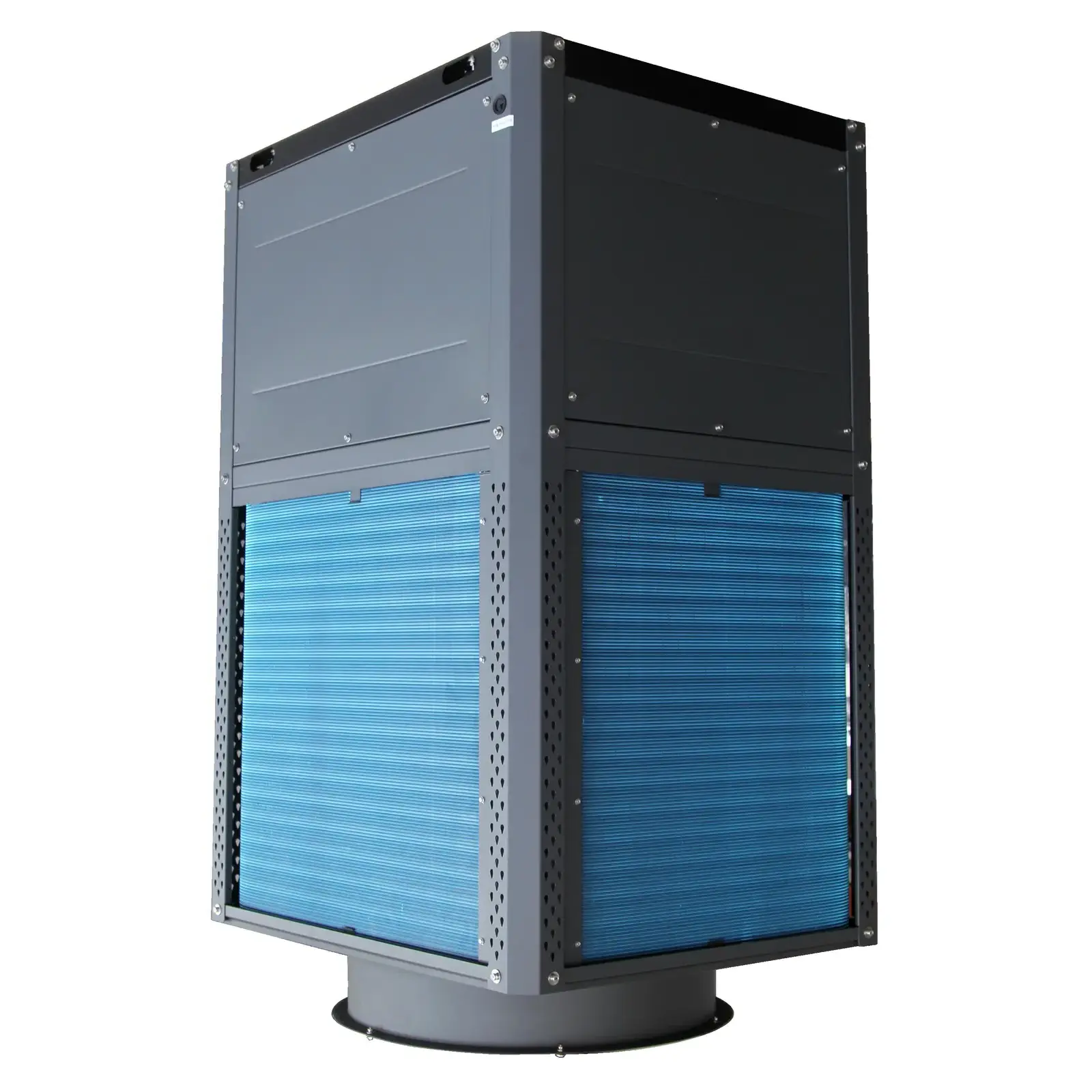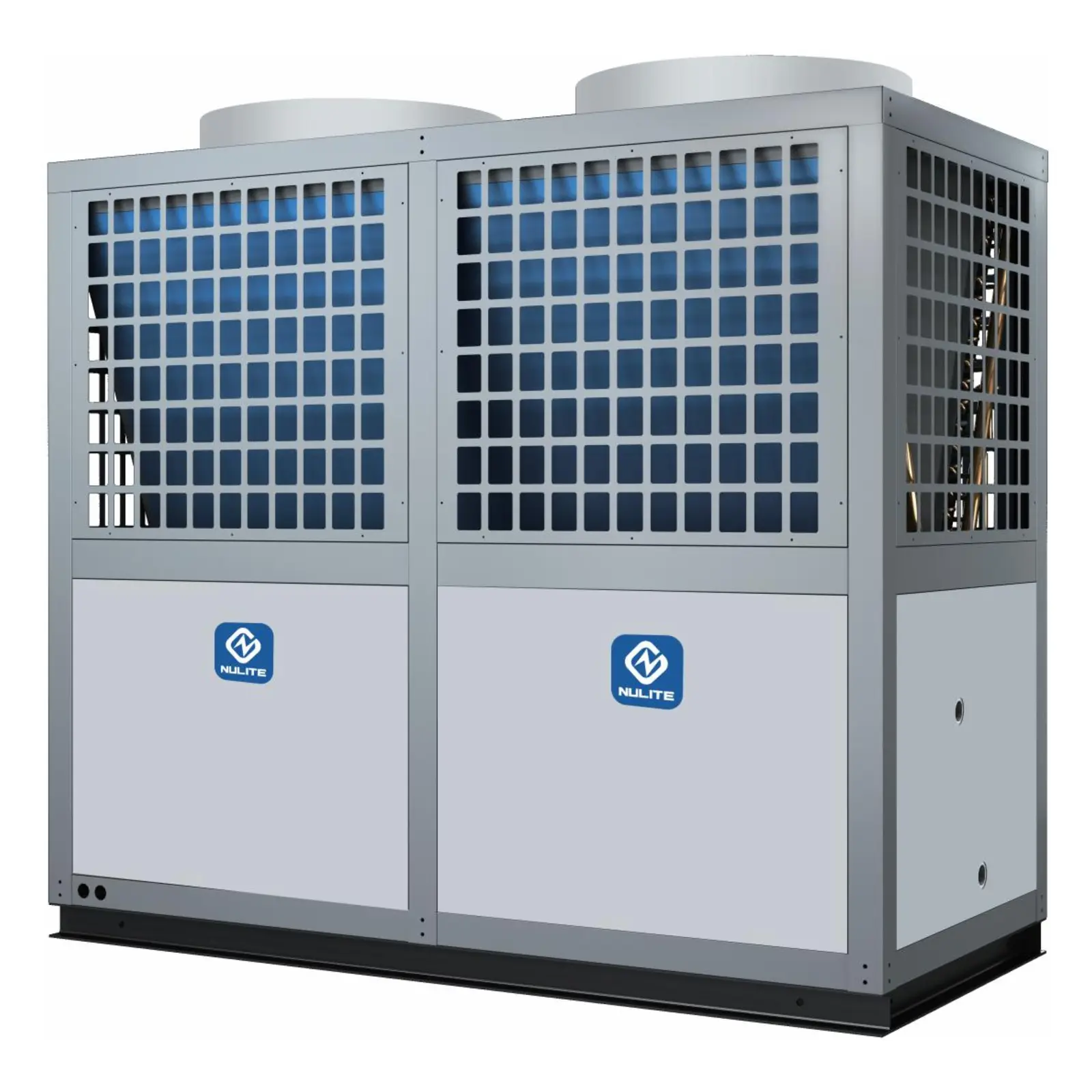
NULITE R410A swimming-pool heat pumps form a 14-model range from compact NL-B1.5Y units for small private pools to industrial NL-G40Y units rated at 150 kW heating output. The equipment maintains pool-water temperature and can provide cooling where required by the project. Cooling output spans 4.55–106.8 kW.
Residential and commercial sizes
NL-B1.5Y through NL-G3Y use 220 V power, while NL-G5Y through NL-G40Y require 380 V three-phase supply. As capacity increases, design water flow rises from 2.5 to 68.88 m³/h and connection size from 1.5 to 3 inches. This allows one product family to serve projects of very different scale.
Key features
- Heating output from 6.5 to 150 kW and cooling output from 4.55 to 106.8 kW.
- R410A refrigerant and IPX4 protection.
- Rated pool-water temperature of 28 °C and maximum stated temperature of 40 °C.
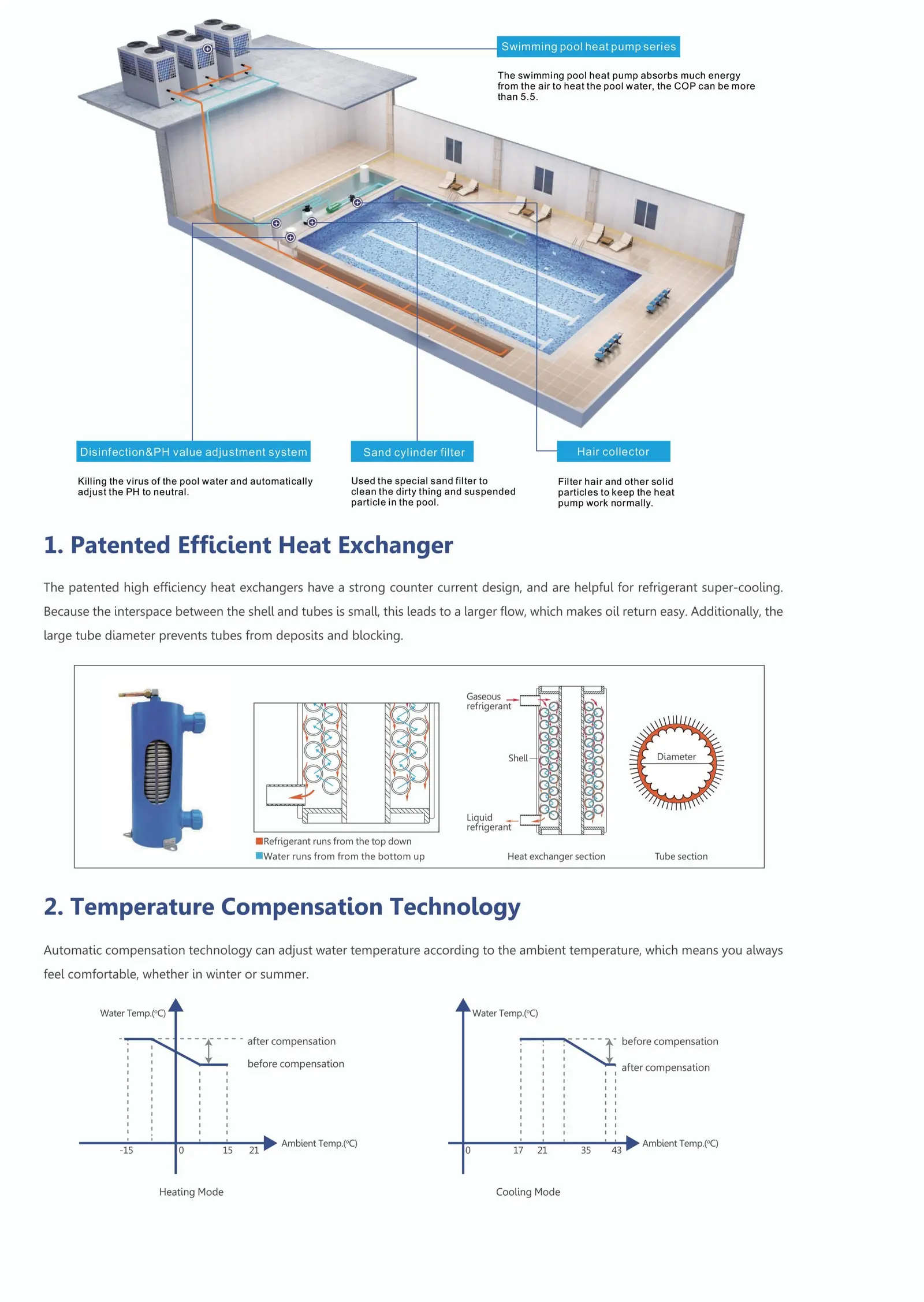
- Manufacturer-described patented counterflow shell-and-tube heat exchanger.
- Ambient-temperature compensation.
- Antifreeze protection based on ambient and outlet-water temperatures.
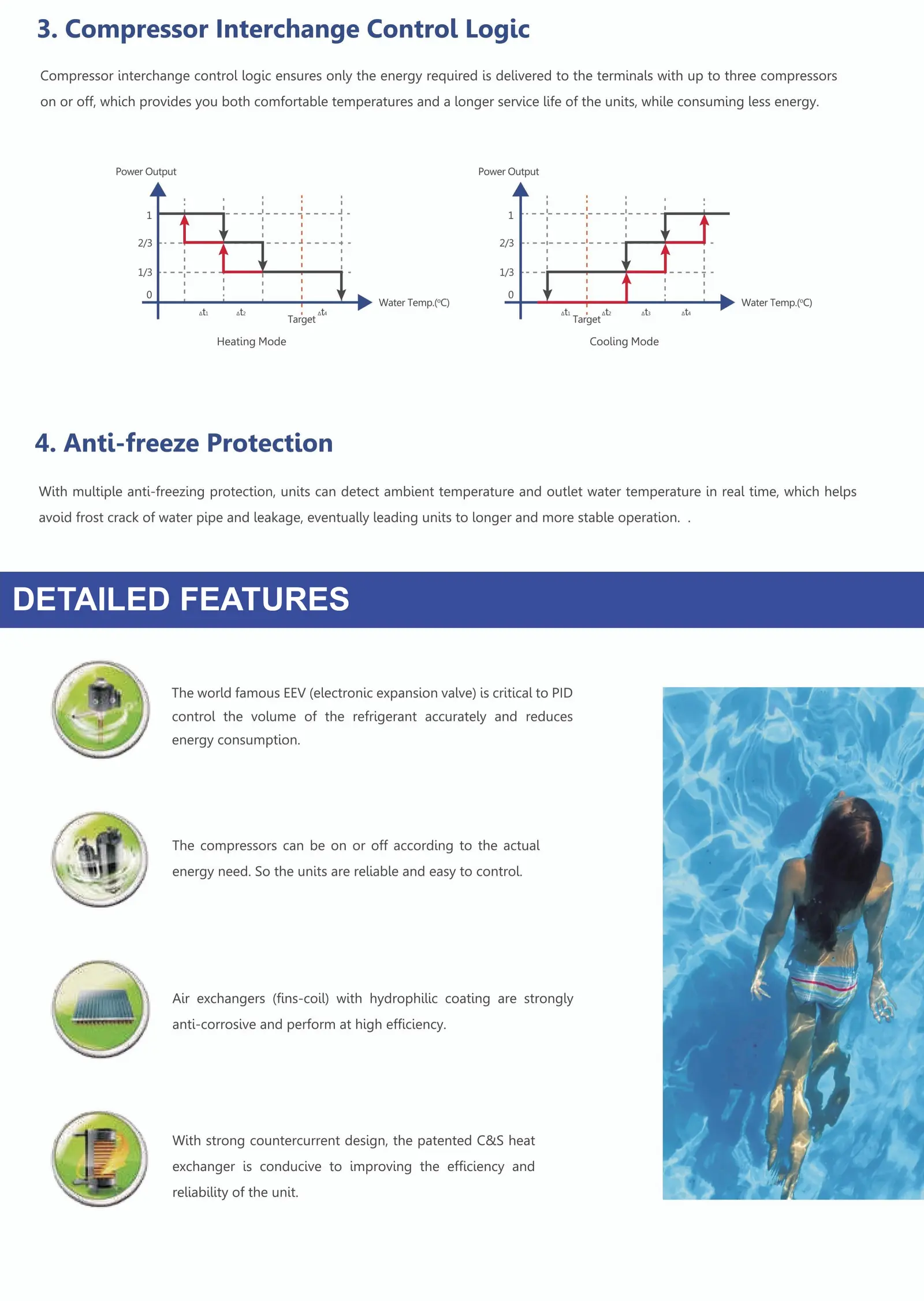
- Electronic expansion valve with PID control.
- Compressor interchange logic for larger multi-compressor units.
Applications
- Private outdoor and indoor pools.
- Hotels, resorts, sanatoriums, and spa complexes.
- Sports centres, fitness clubs, and training pools.
- Municipal and public swimming pools.
- Water parks and large leisure facilities.
- Projects requiring multiple heat pumps, staged capacity, or redundancy.
Engineering considerations
Selection is based on heat loss from the water surface and building envelope, evaporation, ventilation, operating schedule, and heat-up time. Commercial projects also account for swimmer load, cold-water make-up, working hours, redundancy, and staged unit operation. Manufacturer ratings are stated for heating at DB 24 °C / WB 19 °C and water 26/28 °C, and for cooling at DB 35 °C / WB 32 °C and water 30/28 °C.
Hydronic connection
The heat pump is installed downstream of mechanical filtration and connected through an adjustable bypass. The design must provide rated flow, dry-run and freeze protection, condensate drainage, safe electrical supply, and unrestricted air discharge. Chemical dosing must be arranged so concentrated treatment chemicals cannot flow directly into the heat exchanger.
Parameters are based on the supplied manufacturer catalogue. Actual output, consumption, and sound level depend on air and water temperatures, water flow, heat-exchanger cleanliness, and installation conditions. Published values do not replace project calculations.