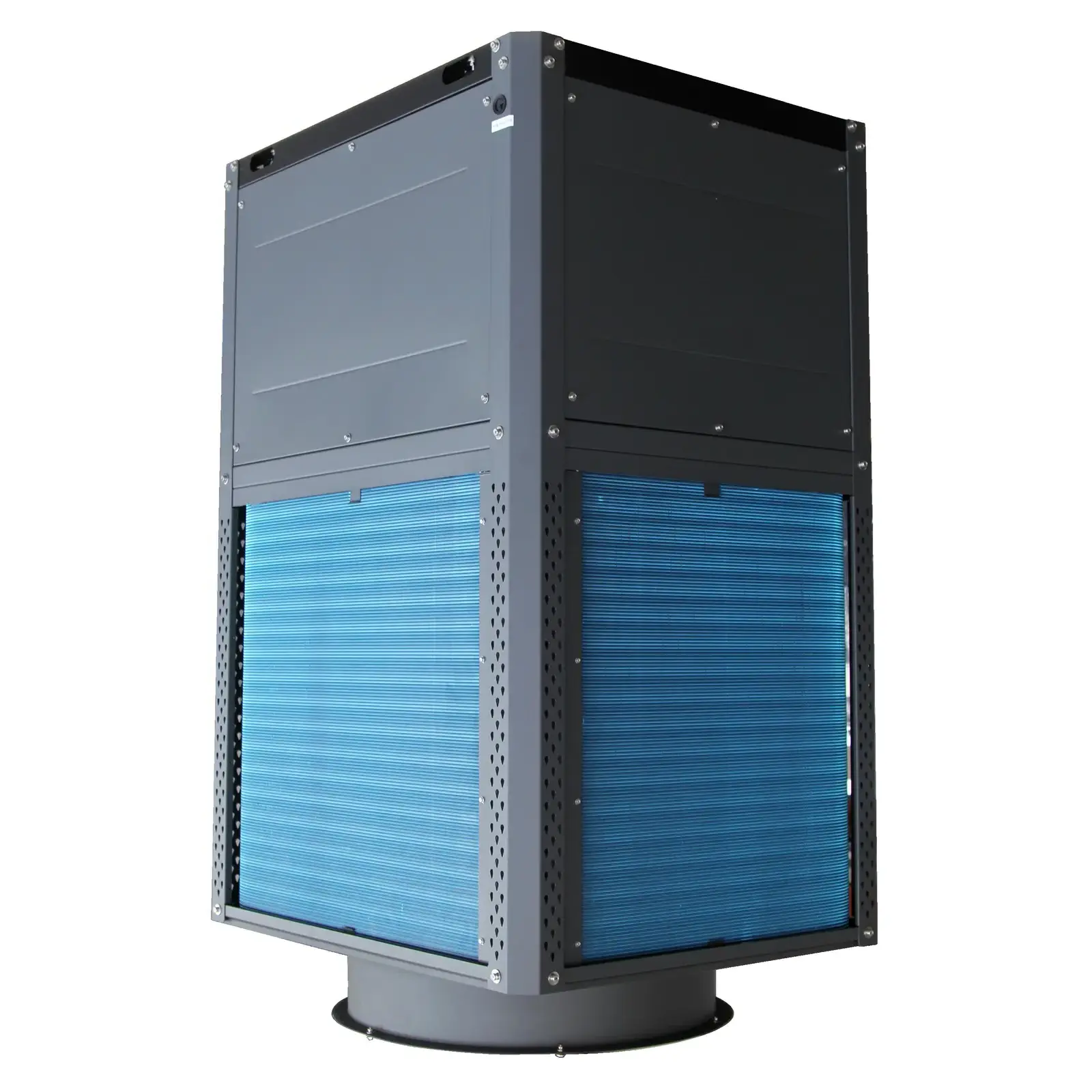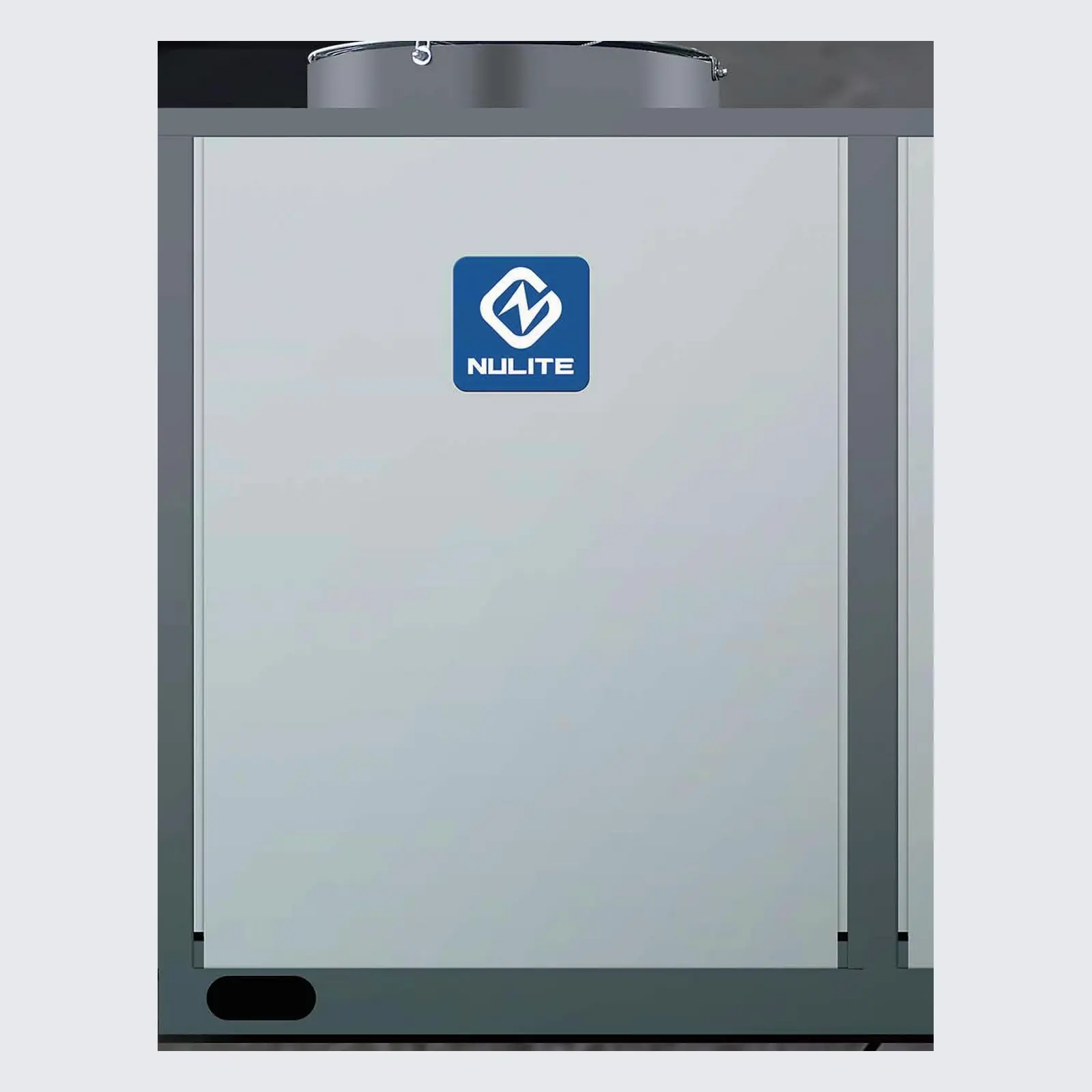
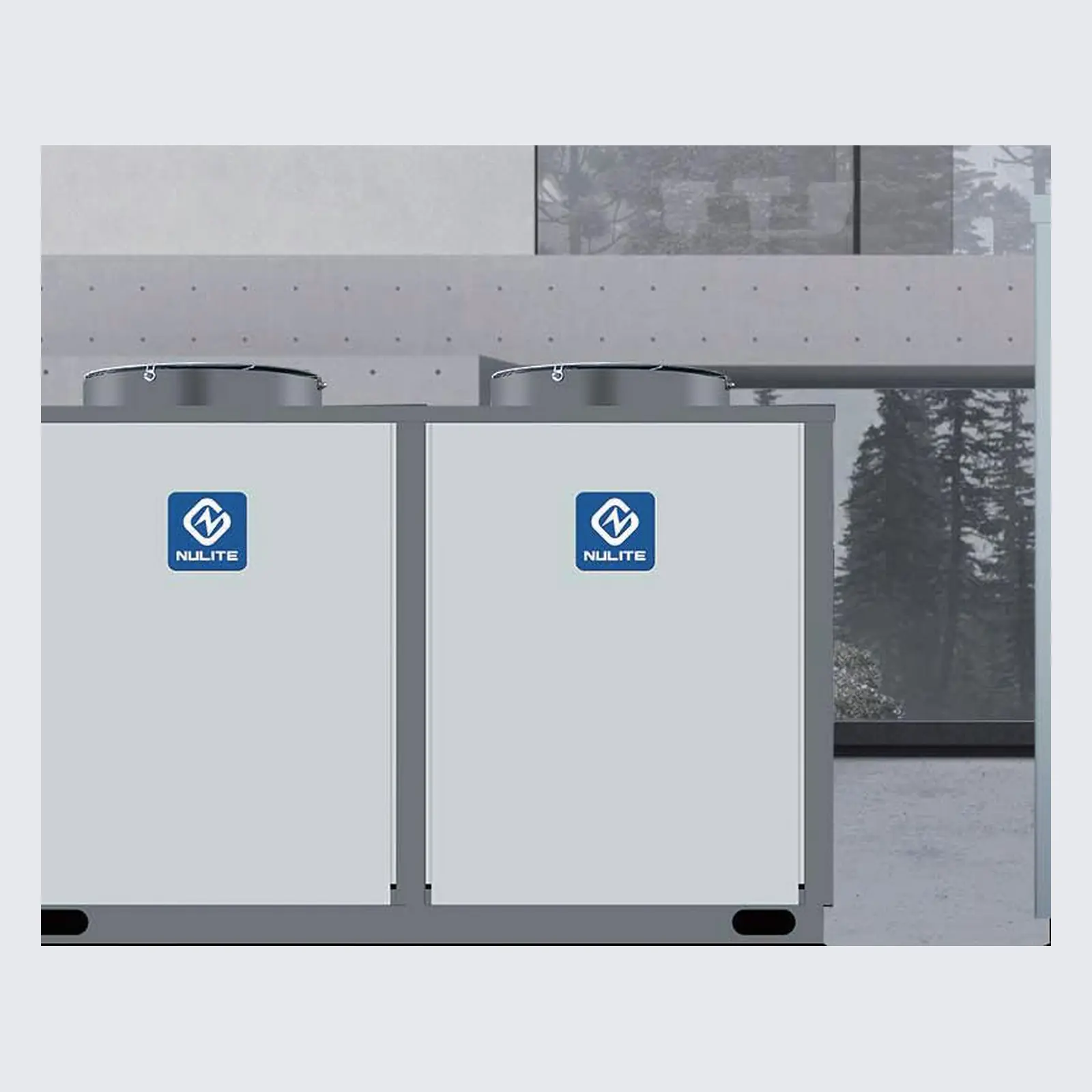
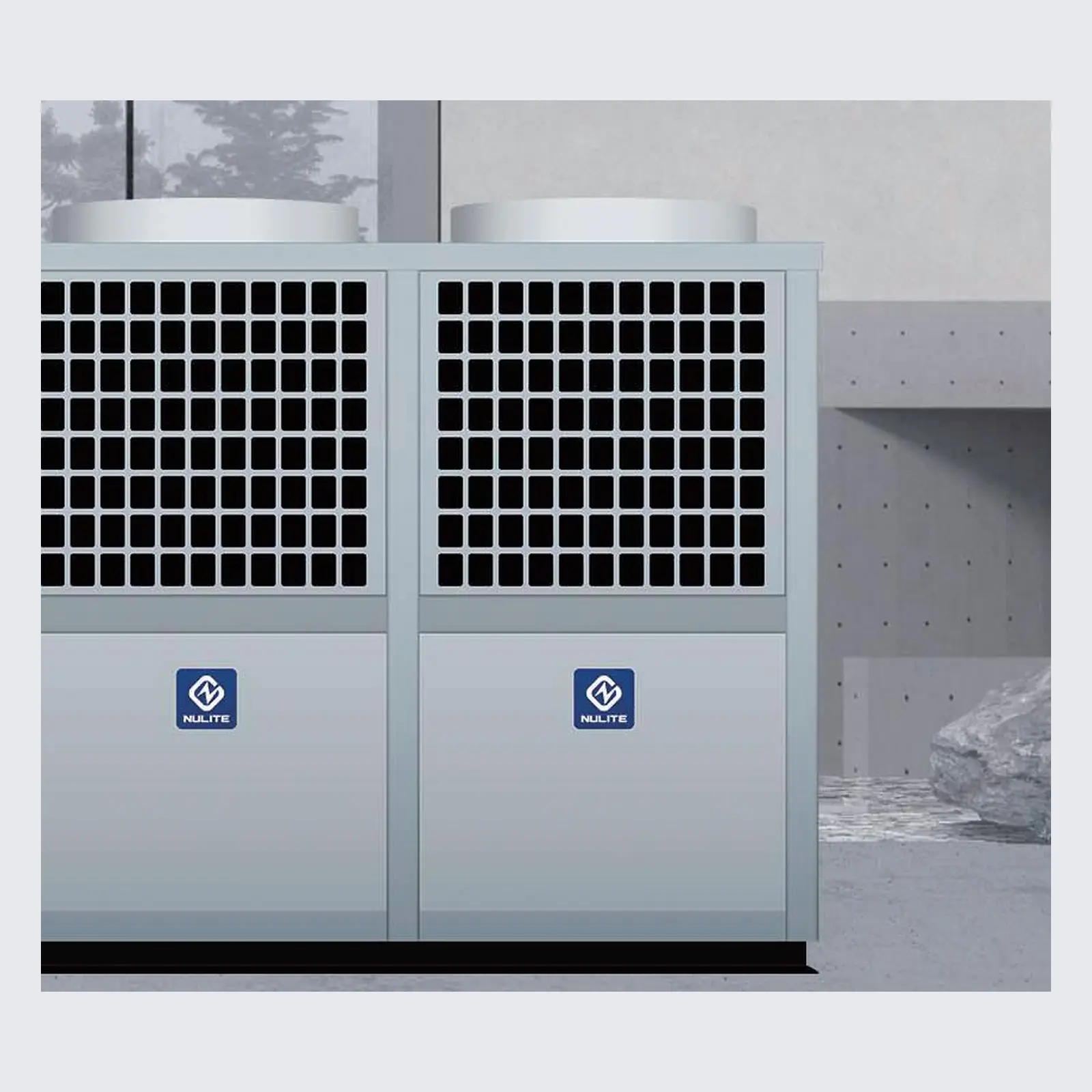


NULITE HeatPower NL-G is a range of high-temperature air-source heat pumps for hot-water production in commercial and industrial facilities. The equipment transfers heat from outdoor air to a hydronic circuit and is intended for applications where conventional domestic hot-water temperatures are insufficient.
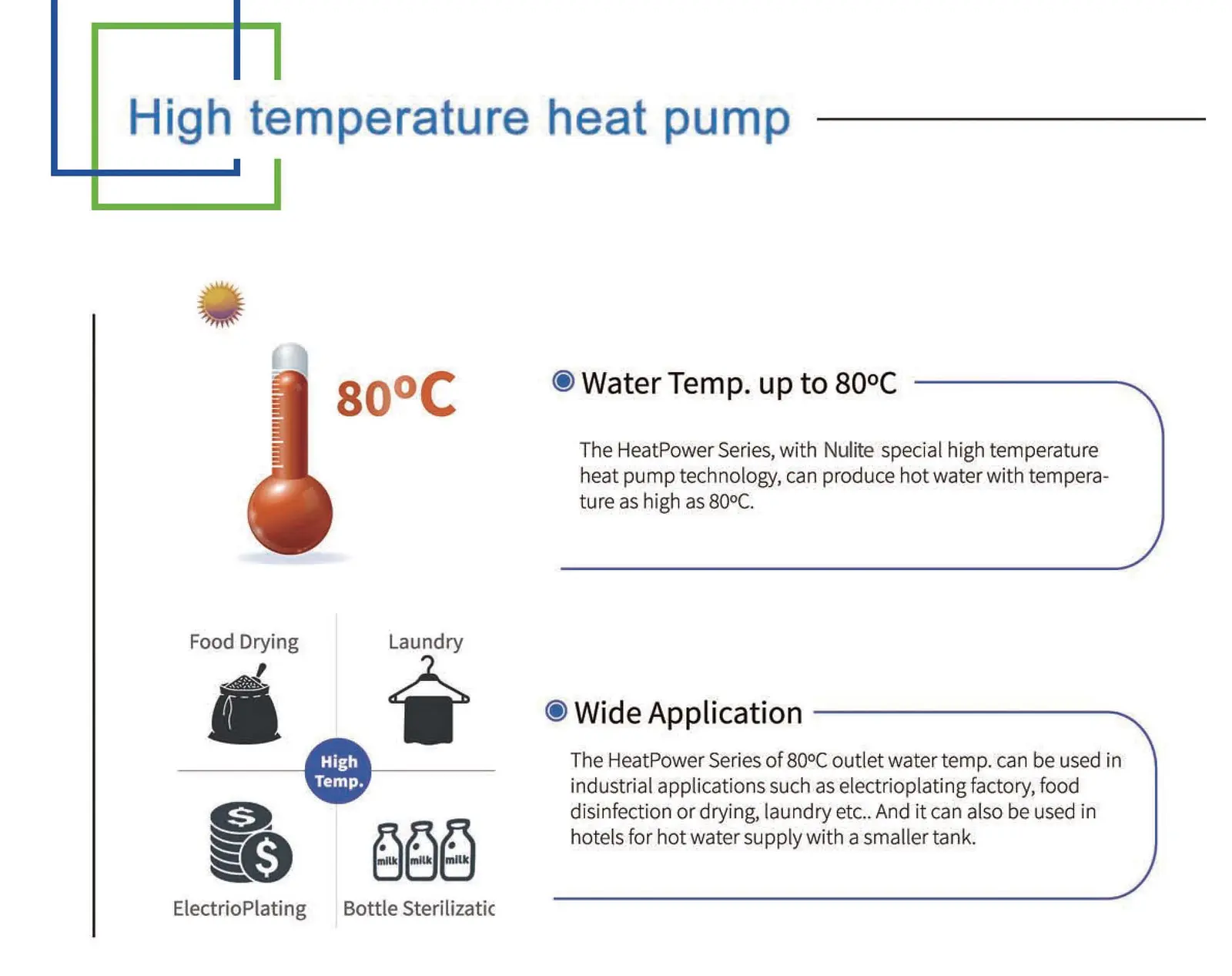
Water temperature of 75–80 °C
The technical table specifies a maximum water temperature of 75 °C for all 12 models. On a separate brochure page, the manufacturer describes its dedicated HeatPower technology and states that water temperatures up to 80 °C can be produced. Achievable temperature and capacity depend on the selected configuration, outdoor air temperature, entering water temperature, and operating settings; any 80 °C requirement must be confirmed during selection.
The higher temperature can reduce the required stored hot-water volume where downstream mixing is used, accelerate tank recovery, and support processes that require hotter water.

12 models from 11.4 to 230 kW
The range includes NL-G3G, NL-G5G, NL-G6G, NL-G8G, NL-G10G, NL-G12G, NL-G20G, NL-G24G, NL-G30G, NL-G40G, NL-G50G, and NL-G60G. According to the manufacturer's table, rated heating capacity extends from 11.4 to 230 kW and design water flow from 2 to 41 m³/h. All models use a three-phase 380 V, 50 Hz supply and R410A refrigerant.
The range covers compact single-cabinet units, twin-module versions, and large industrial systems. A project may therefore use one unit or a staged cascade with partial redundancy and capacity control.

Applications
The brochure explicitly lists food drying, laundries, electroplating, bottle sterilization, and hotel hot-water supply. Subject to the required design temperature, HeatPower can be considered for:
- industrial laundries, dry-cleaning plants, and textile facilities;
- food processing, raw-material drying, and preparation of hot process water;
- washing and sterilization of containers, bottles, and production equipment;
- electroplating lines and other processes using heated water baths;
- hotels, resorts, dormitories, sports facilities, and shower blocks;
- hospitals, commercial kitchens, catering facilities, and other sites with sustained hot-water demand;
- centralized hot-water systems for commercial and residential properties.

Multi-level protection
- Water flow control: the unit stops below the minimum flow setpoint and restarts when normal flow is restored.
- Antifreeze function: the circulation pump starts automatically when entering water temperature becomes too low.
- High and low pressure: refrigerant-circuit pressure is monitored and the unit shuts down outside the permitted range.
- Discharge temperature: the compressor stops above 110 °C and restarts after temperature falls below 85 °C.
- Compressor overload: the unit stops automatically to protect the equipment.

Selection, storage, and cascade design
Selection is based on daily hot-water volume, peak-hour demand, required temperature, storage recovery time, cold-water temperature, and local climate. Hotel projects require analysis of occupancy and morning peaks, while industrial processes require checks of continuity, return temperature, and shift duration.
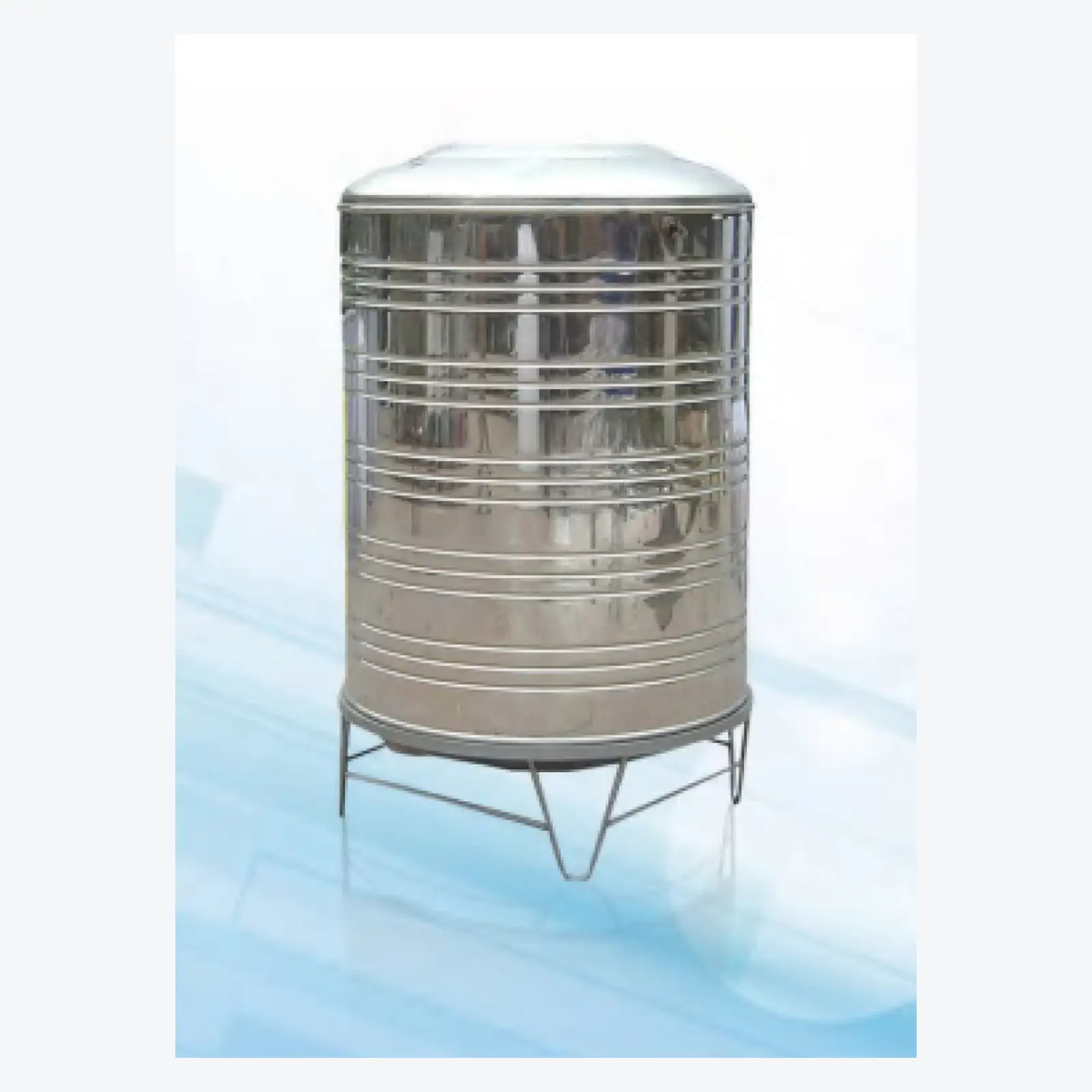
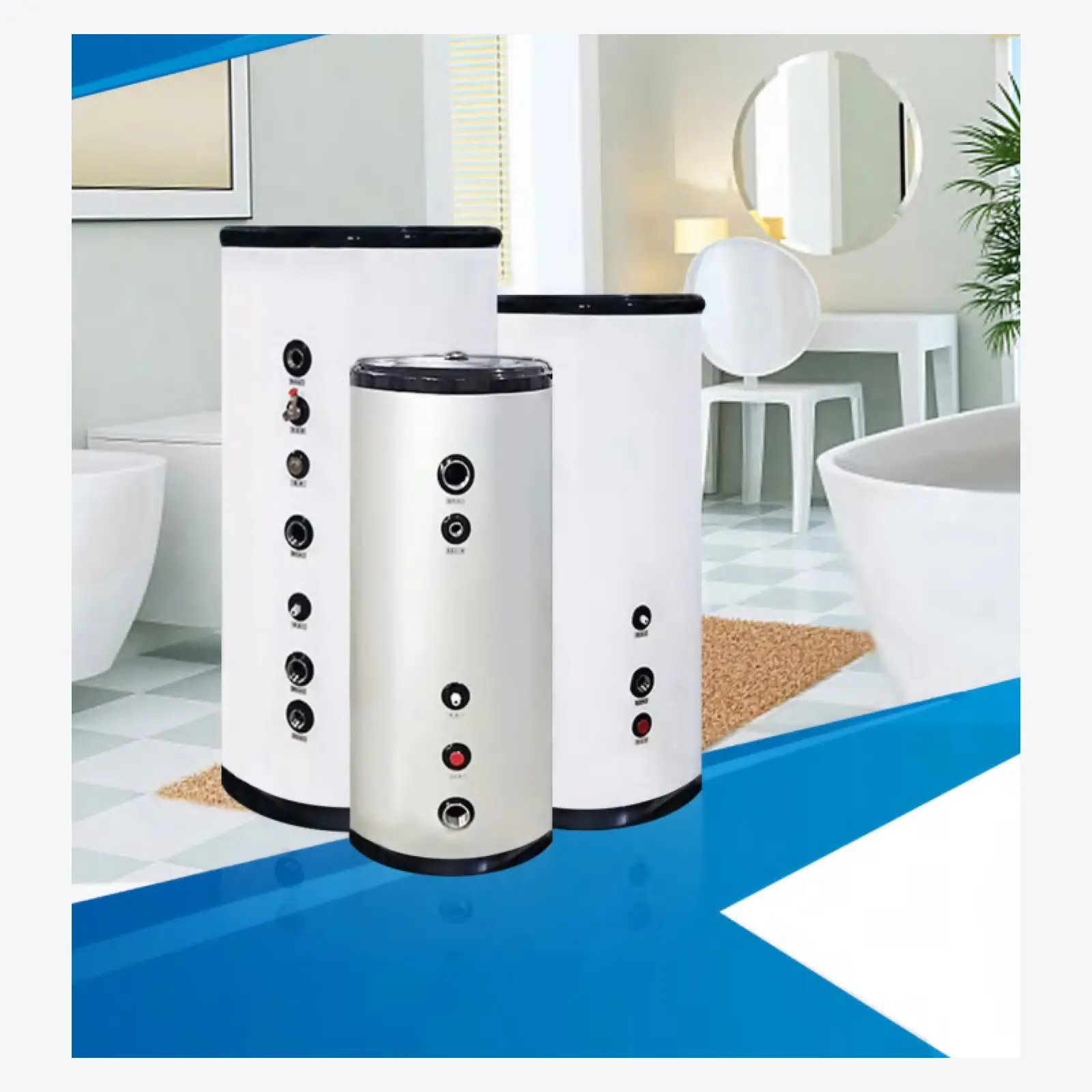
A complete system normally includes a storage tank, circulation pumps, temperature and level sensors, isolation valves, and safety equipment. At elevated water temperatures, the temperature ratings of piping, tank materials, pumps, and seals must be checked. User scald protection and mixing valves may also be required.
For large facilities, a cascade offers staged capacity control, partial redundancy, and the ability to service one module without shutting down the entire system. Design checks include unrestricted airflow, condensate drainage, freeze protection, service access, foundation loading, and acoustic limits.

The catalog ratings are based on 20 °C dry-bulb, 15 °C wet-bulb, and 15/55 °C inlet/outlet water conditions. Actual capacity and maximum temperature depend on operating conditions. An 80 °C requirement, final model, cascade arrangement, and hydraulic design must be confirmed by an engineering calculation.