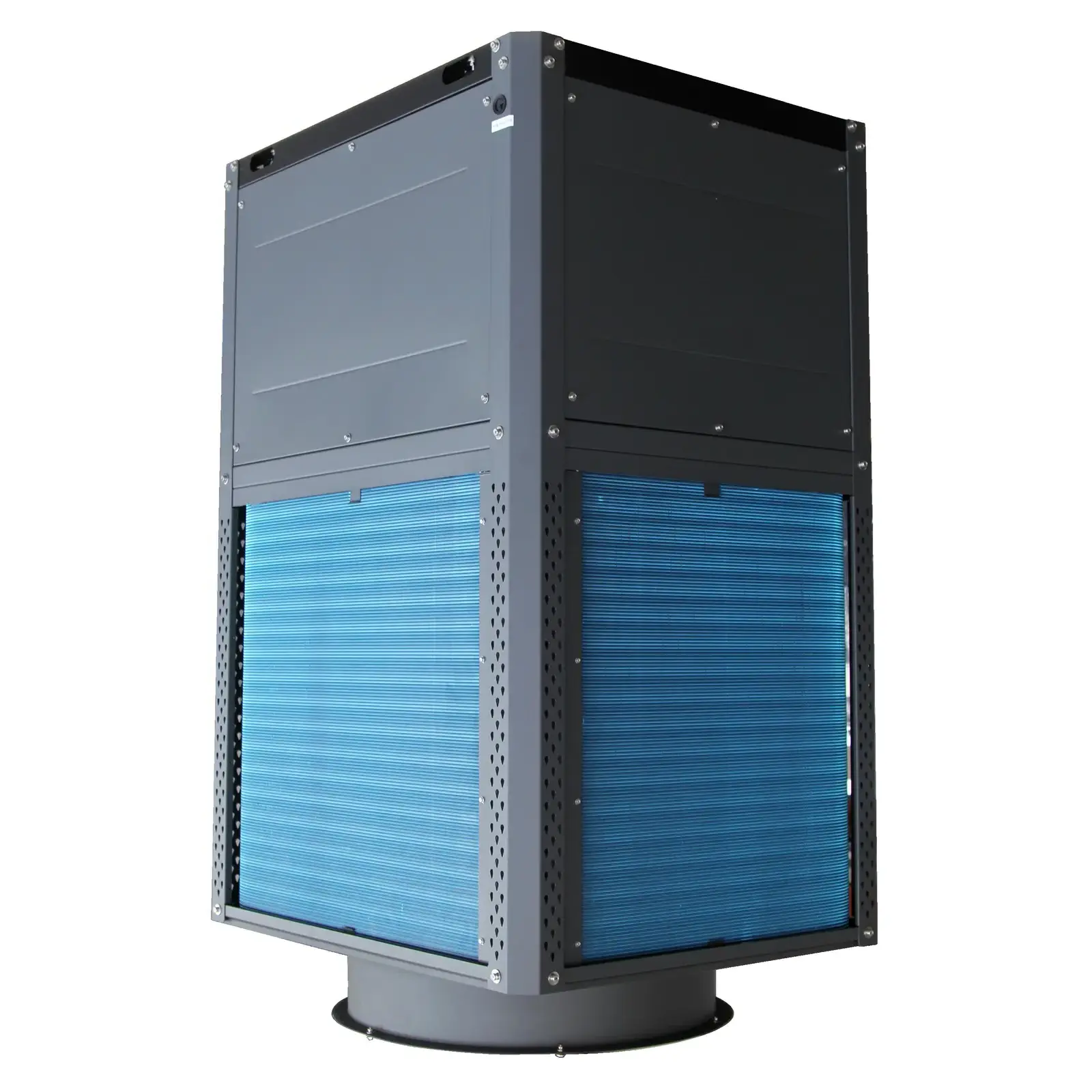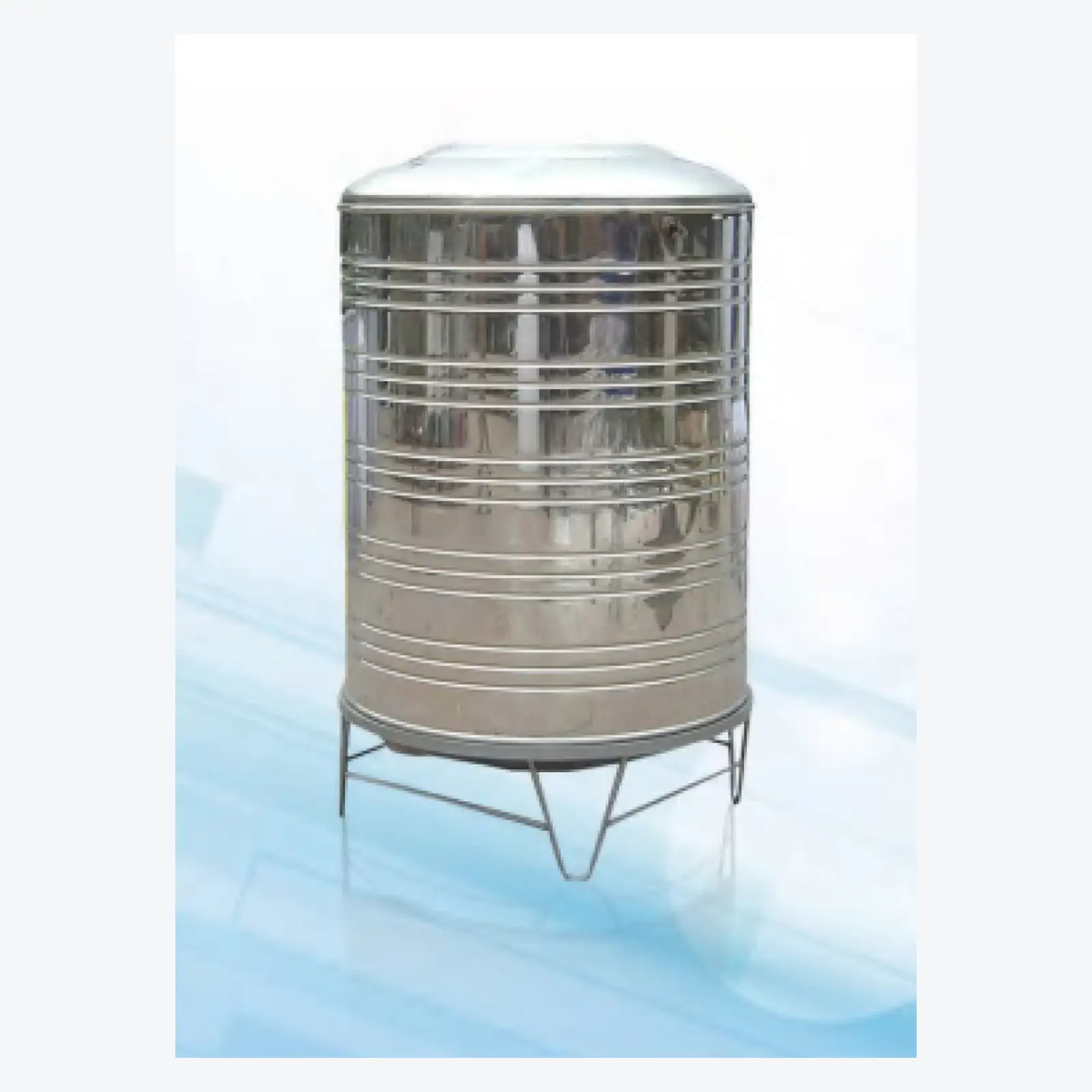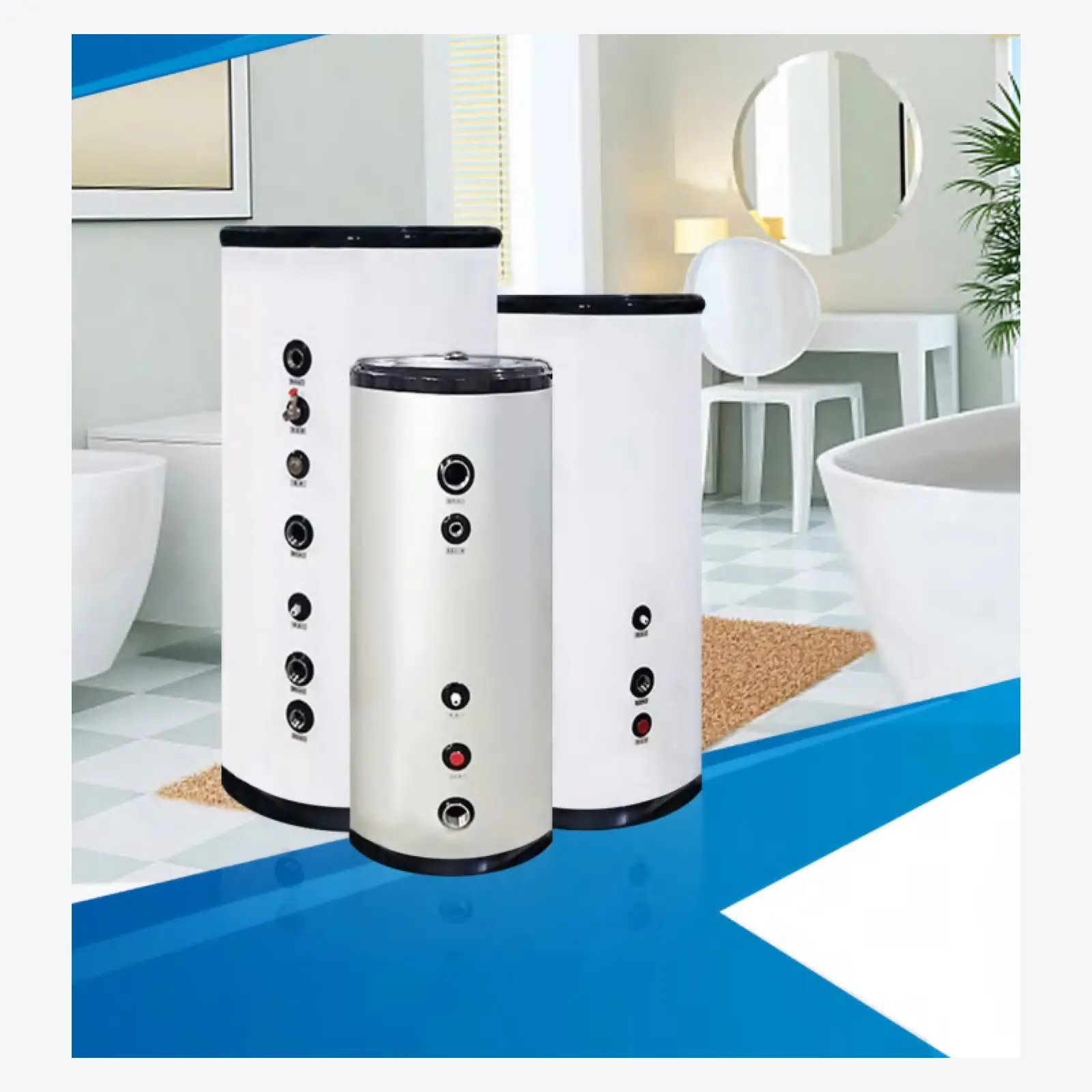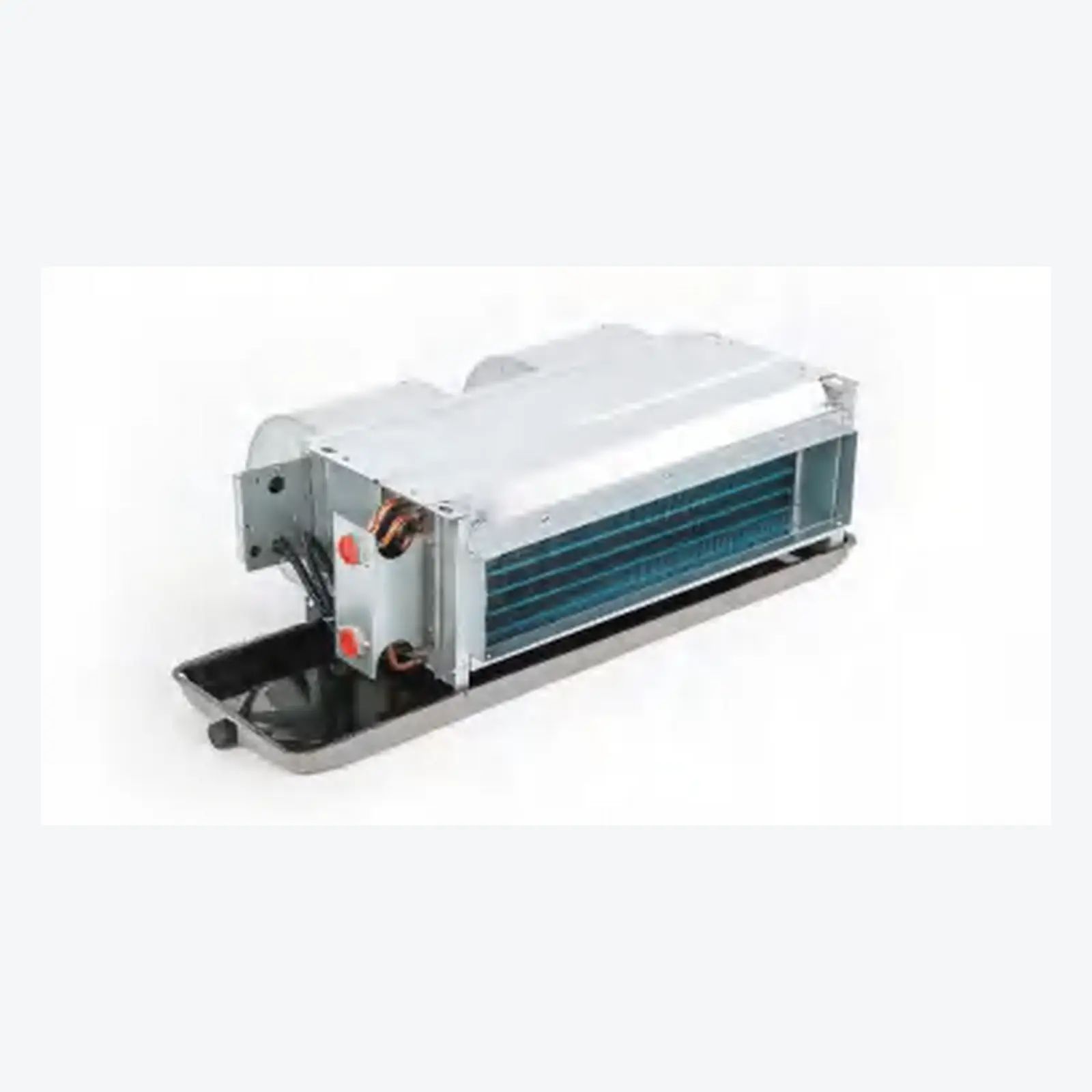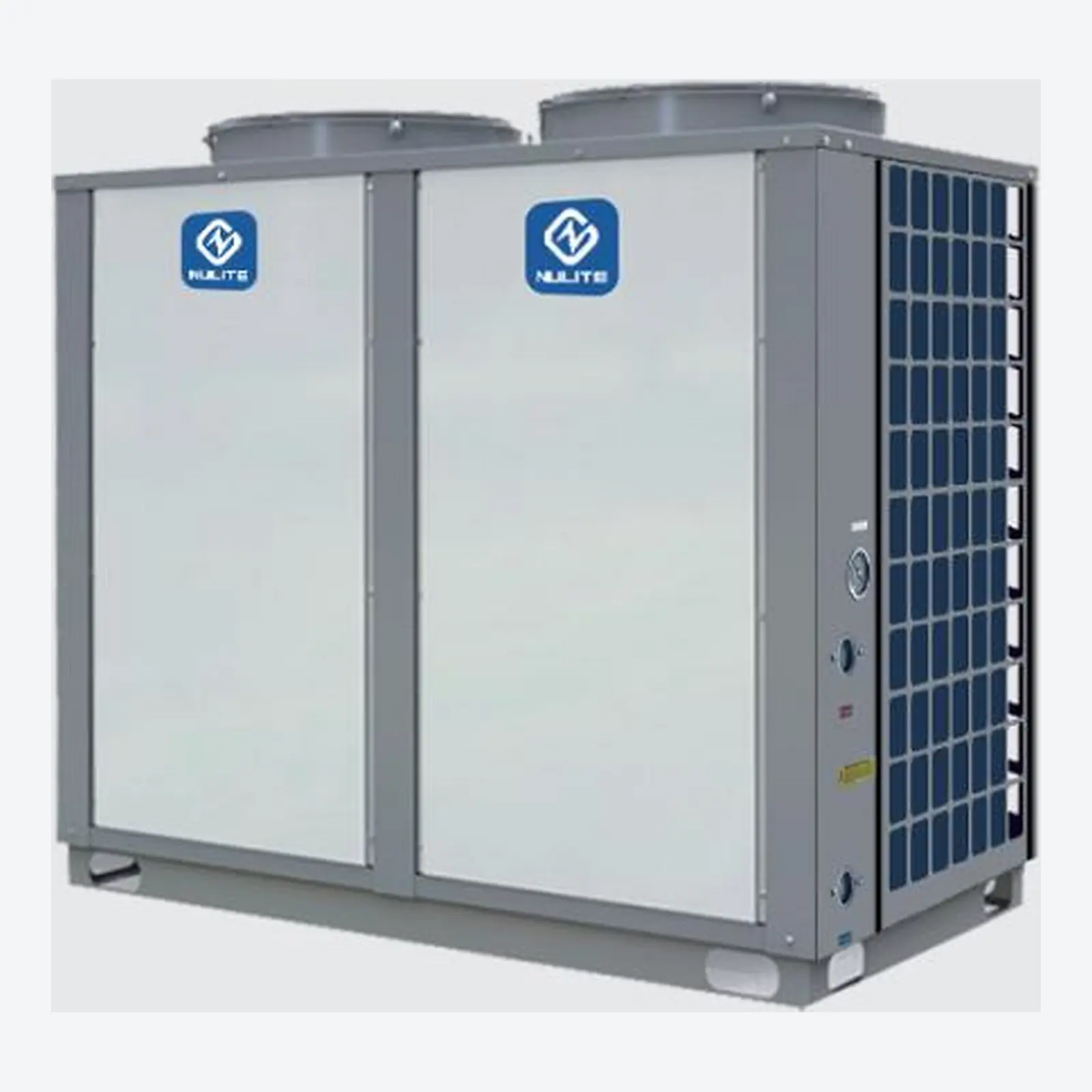
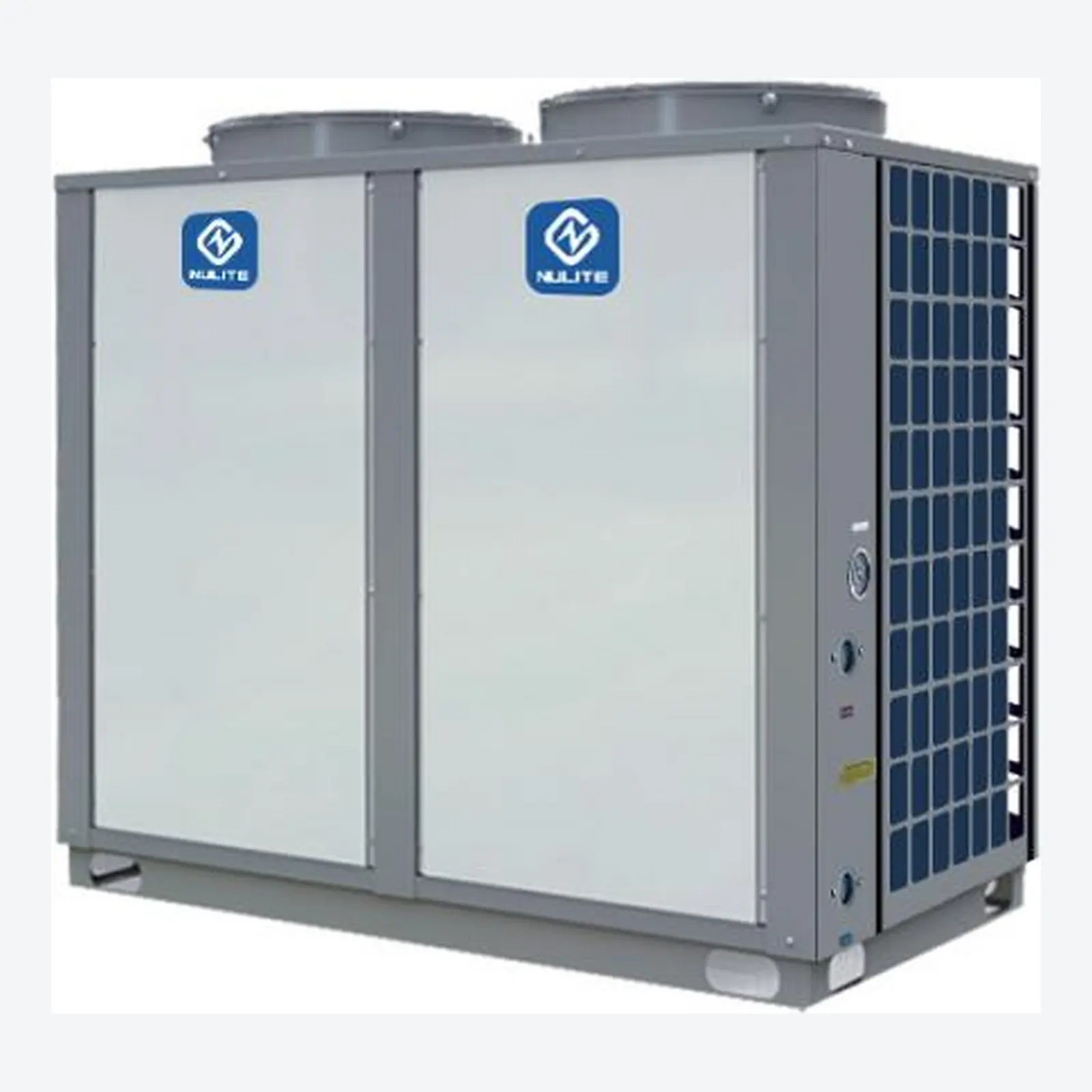
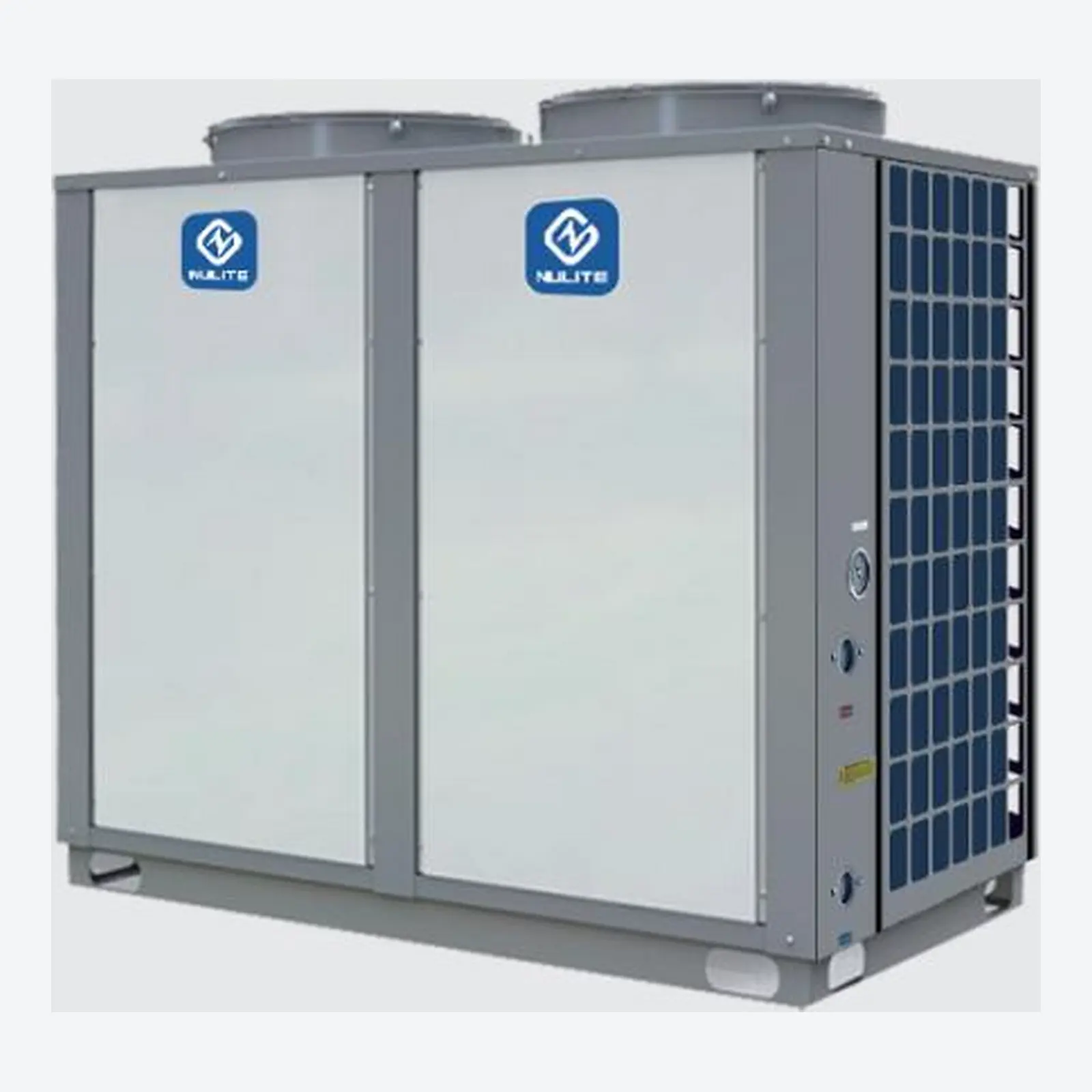
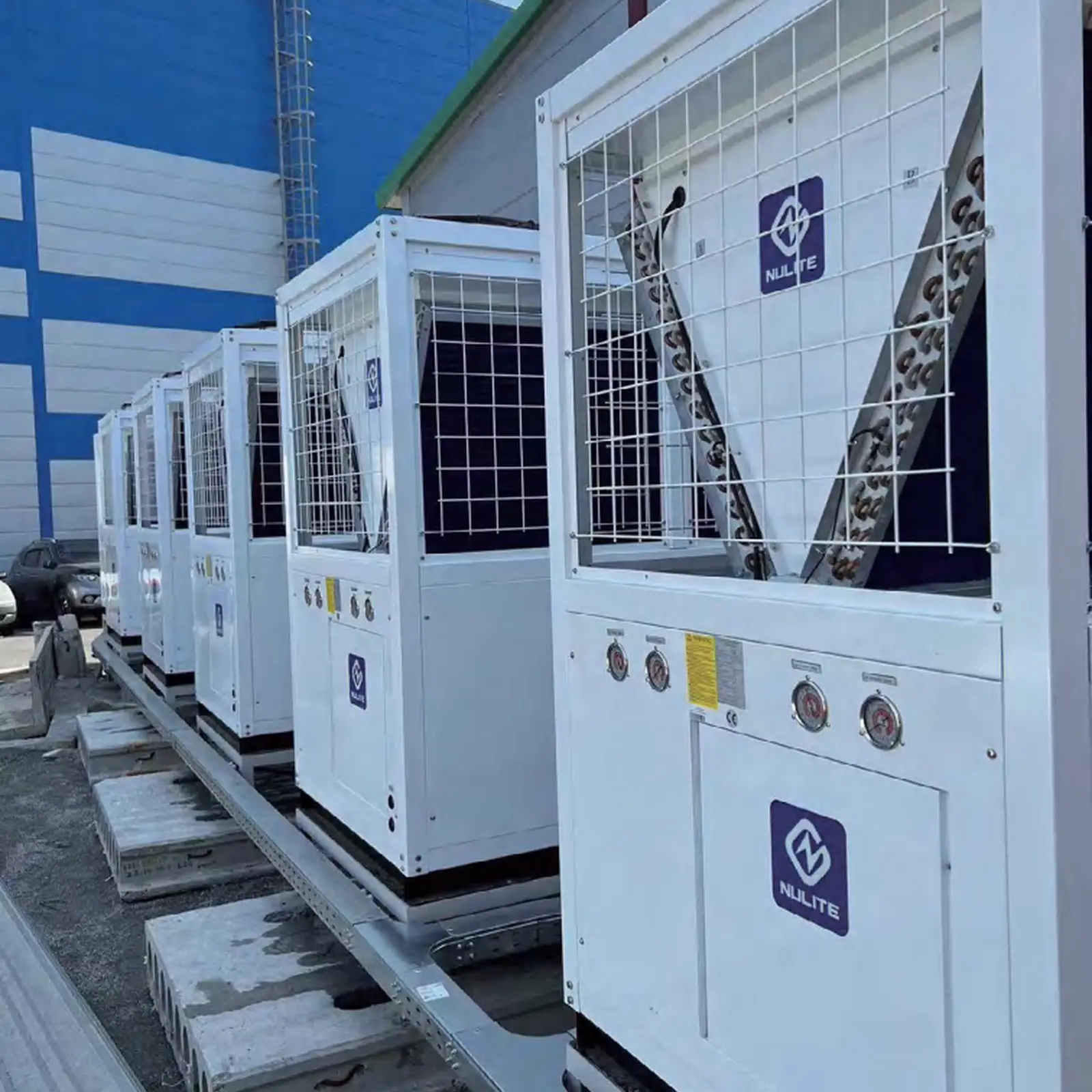
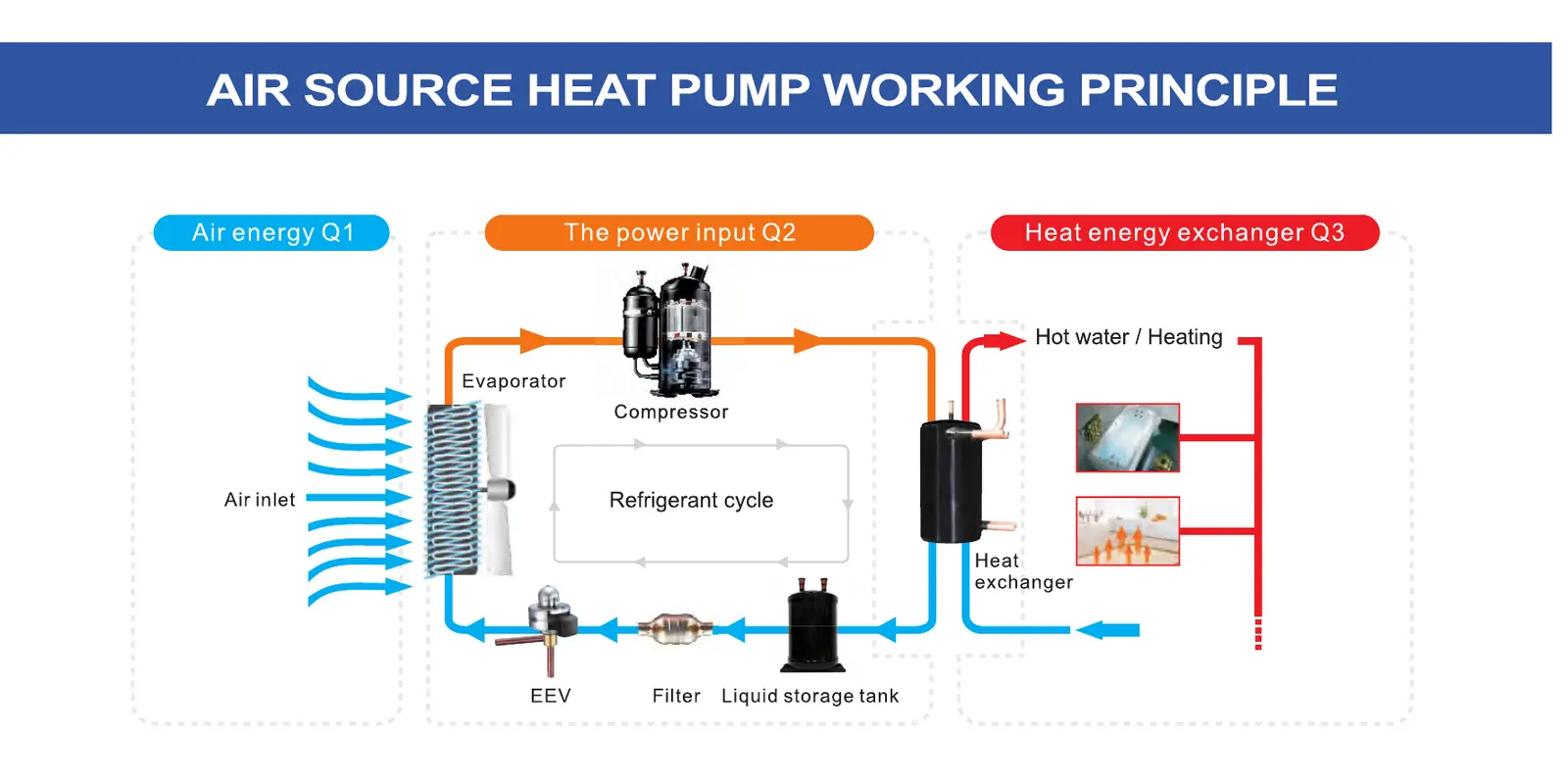
NULITE NL-G is a range of air-source heat pumps for centralized hot-water production in commercial, public, and industrial facilities. The equipment collects low-grade heat from outdoor air and transfers it to the water circuit, reducing the need for direct electric heating in a domestic hot-water system.
Model range from 11.4 to 230 kW
The range comprises 12 models: NL-G3B, NL-G5B, NL-G6B, NL-G8B, NL-G10B, NL-G12B, NL-G20B, NL-G24B, NL-G30B, NL-G40B, NL-G50B, and NL-G60B. According to the manufacturer's table, rated heating capacity extends from 11.4 to 230 kW and design water flow from 2 to 41 m³/h. All versions use a three-phase 380 V, 50 Hz supply, R410A refrigerant, and deliver water at up to 60 °C.
The broad capacity range supports selection of a single unit or a staged cascade for the required hot-water demand profile. Smaller models use compact single-fan cabinets, while higher capacities use enlarged twin-fan and multi-module configurations.

Main components
- Copeland ZW series scroll compressors intended for heat-pump duty at elevated pressure and temperature.
- A hydrophilic finned evaporator with a large face area for effective air-side heat exchange.
- A coaxial tube-in-tube or high-efficiency shell-and-tube heat exchanger, depending on configuration.
- An industrial controller with RS-485 communication, protective functions, and remote on-off input.
- A refrigerant receiver, filter, and electronic expansion device in the refrigerant circuit.

Typical hot-water system
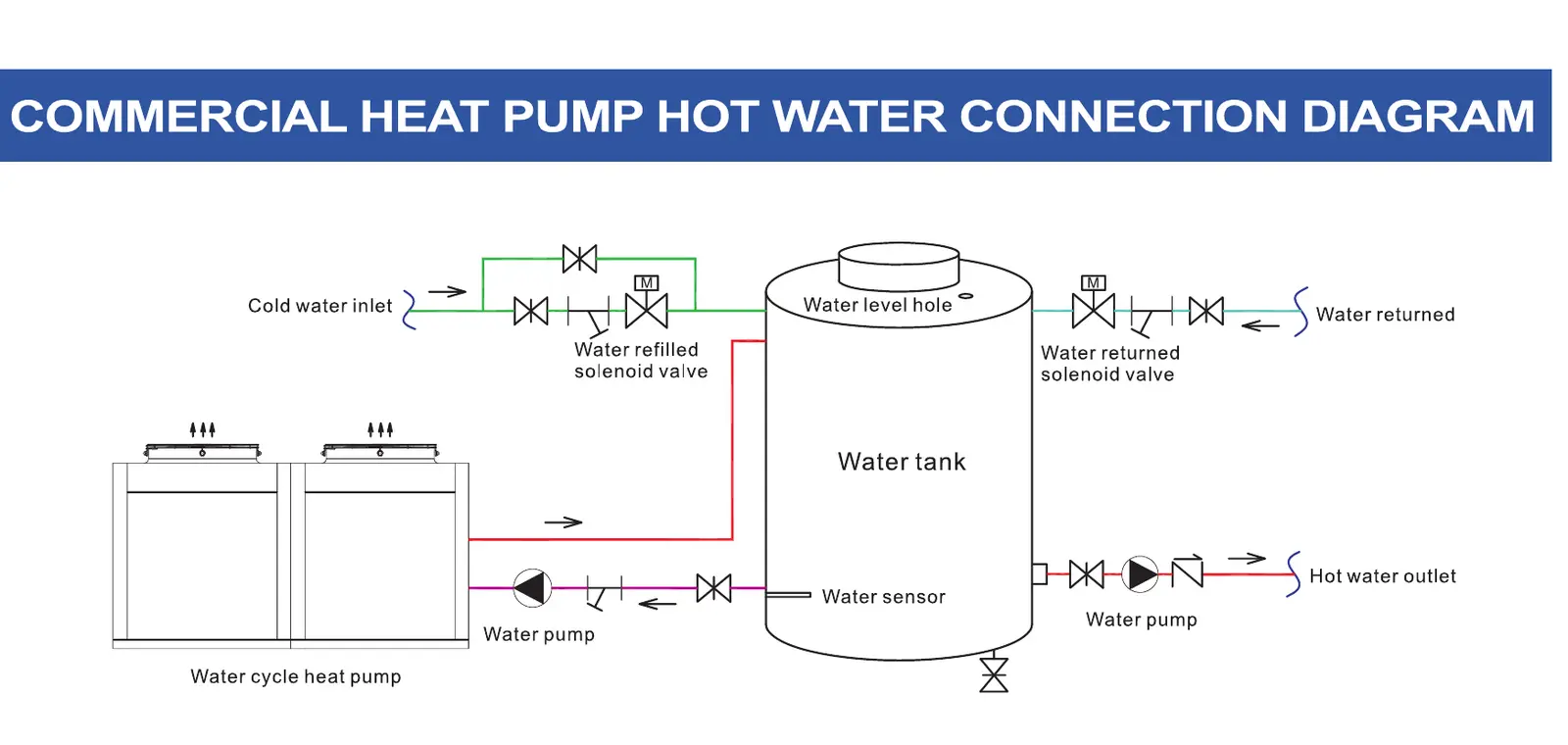
NL-G is a hydronic heat pump designed to operate with a storage tank in an engineered system. The manufacturer's typical diagram includes circulation pumps, water temperature and level sensing, make-up and return solenoid valves, isolation valves, a cold-water inlet, and the hot-water distribution line. Storage helps cover uneven demand during the day and reduces compressor cycling.

Applications
- Hotels, serviced apartments, resorts, recreation centers, and dormitories.
- Hospitals, clinics, care facilities, and other sites with regular hot-water demand.
- Schools, kindergartens, sports facilities, fitness centers, and shower blocks.
- Industrial plants, workforce accommodation, and employee welfare facilities.
- Laundries, food production, commercial kitchens, and processes requiring water up to 60 °C.
- Centralized domestic hot-water systems for residential developments and commercial properties.

Selection and system design
Model selection is based on daily hot-water consumption, peak-hour demand, incoming water temperature, required storage recovery time, local climate, and available electrical capacity. Storage volume and the number of heat-pump modules require calculation and should not be selected from nominal capacity alone.
The design must account for heat-exchanger flow, hydraulic resistance, pipe sizes, redundancy, freeze protection, condensate drainage, unrestricted airflow, and service clearances. Large units also require checks for foundation loading, transport access, acoustic limits, and staged cascade control.
The catalog ratings are based on 20 °C dry-bulb, 15 °C wet-bulb, and 15/55 °C inlet/outlet water conditions. Actual capacity depends on air and water temperature, operating mode, and system design. Final equipment selection and piping must be confirmed by an engineering calculation.